Credibility & Perspective
About the Author
Each SH Parent Resource Center article is written by an experienced educator and family therapist and provides research-informed guidance grounded in practical classroom experience and a family-systems perspective. The resources are designed to help families better understand school challenges, learning habits, behavior, communication, and emotional development while providing realistic strategies that can be used at home and in partnership with schools.
Parent Resource Library
Peer Relationships, Conflict & Bullying
Free Parent Resource
Helping a Child Who Has Trouble Making Friends
Peer Relationships, Conflict & BullyingProtected PDFFree
Topic
When a child has trouble making friends, avoid treating friendship as a popularity contest. The first goal is to understand the specific barrier and practice one small social skill or connection opportunity at a time.
Research Basis
Supported by guidance and research from the American Academy of Pediatrics and HealthyChildren.org.
Included Activity
Friendship Practice: One Small Step at a Time. Use this page to identify one social situation, practice one skill, and create one realistic opportunity for connection.
View / Download PDF
Free Parent Resource
What to Do When Your Child Feels Left Out at School
Peer Relationships, Conflict & BullyingProtected PDFFree
Topic
Feeling left out can range from a painful one-time disappointment to a repeated pattern that needs adult attention. Listen for facts first so you can distinguish ordinary exclusion, a recurring social pattern, and behavior that may meet the definition of bullying.
Research Basis
Supported by guidance and research from StopBullying.gov and the Centers for Disease Control and Prevention.
Included Activity
Left-Out Situation Check: What Happened and What Comes Next? Use this page to separate a one-time disappointment from a repeated pattern and decide on a proportionate next step.
View / Download PDF
Free Parent Resource
Bullying or Normal Conflict? Helping Parents Tell the Difference
Peer Relationships, Conflict & BullyingProtected PDFFree
Topic
A painful peer problem is not automatically bullying, and using the right description helps adults choose the right response. Bullying involves unwanted aggressive behavior, a real or perceived power imbalance, and repetition or the potential for repetition over time.
Research Basis
Supported by guidance and research from StopBullying.gov and the Centers for Disease Control and Prevention.
Included Activity
Bullying or Conflict? Five-Question Situation Check. Use this page to describe the behavior first, then decide whether the pattern fits bullying, peer conflict, or another concern.
View / Download PDF
Recommended Product
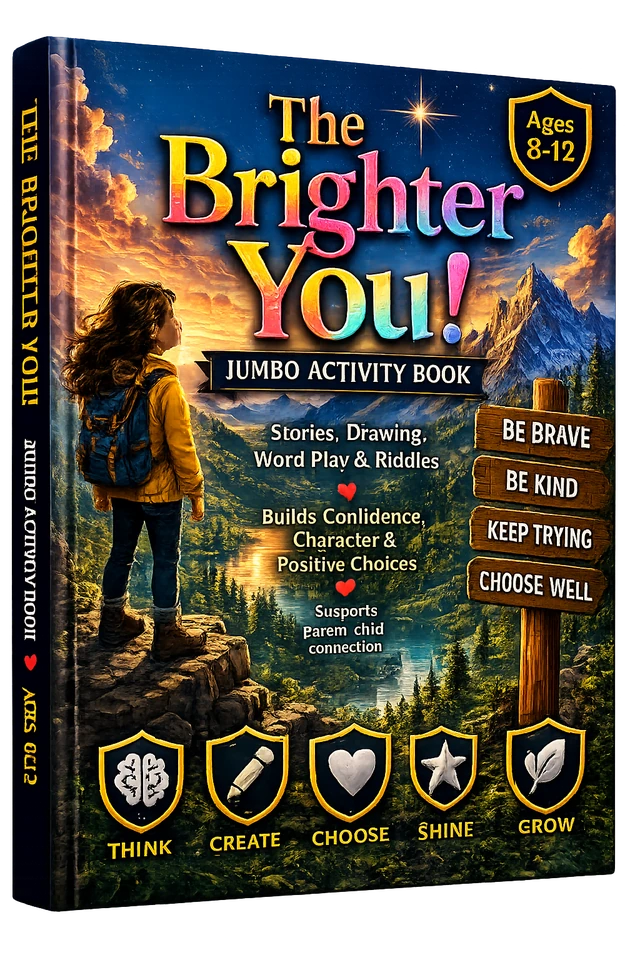
The Brighter You! Jumbo Activity Book
SH-K12 maintains a working relationship with Bilingual Learning Zone (BLZ) and highlights selected educational resources that complement our support for families.
Designed for ages 8–12, The Brighter You! combines stories, drawing, word play, riddles, and reflection activities that encourage confidence, character, creativity, self-awareness, positive choices, and parent-child connection through play.
Ages 8–12254 PagesStories • Drawing • Word Play • Riddles