Credibility & Perspective
About the Author
Each SH Parent Resource Center article is written by an experienced educator and family therapist and provides research-informed guidance grounded in practical classroom experience and a family-systems perspective. The resources are designed to help families better understand school challenges, learning habits, behavior, communication, and emotional development while providing realistic strategies that can be used at home and in partnership with schools.
Parent Resource Library
Back-to-School & Daily Routines
Free Parent Resource
Building Family Routines That Reduce Stress and Conflict
Back-to-School & Daily RoutinesProtected PDFFree
Topic
Family life can feel rushed when no one knows what comes next. A simple routine gives children clear steps. It can also help parents repeat fewer directions during busy parts of the day.
Research Basis
Supported by guidance and research from American Academy of Pediatrics, Centers for Disease Control and Prevention, and Center on the Developing Child at Harvard University.
Included Activity
Family Routine Builder. Use this page to build one simple family routine. Start small, keep the steps clear, and change one part at a time.
View / Download PDF
Parent Resource Library
Parent-Child Communication & Emotional Support
Free Parent Resource
How to Listen So Your Child Keeps Talking
Parent-Child Communication & Emotional SupportProtected PDFFree
Topic
Your child may not need a quick answer. Often, a child first needs to feel heard and understood. When children feel safe, they are more likely to share worries, mistakes, and questions.
Research Basis
Supported by guidance and research from American Academy of Pediatrics, Centers for Disease Control and Prevention, and Center on the Developing Child at Harvard University.
Included Activity
Ten-Minute Parent-Child Listening Guide. Use this page for a short, calm talk. The goal is to understand first. You can solve the problem later.
View / Download PDF
Free Parent Resource
Helping Children Work Through Strong Emotions
Parent-Child Communication & Emotional SupportProtected PDFFree
Topic
Strong feelings are not bad because anger, fear, sadness, and disappointment tell us that something feels hard. Children need calm support to learn what to do next. Begin by slowing yourself down.
Research Basis
Supported by guidance and research from American Academy of Pediatrics, Centers for Disease Control and Prevention, and Center on the Developing Child at Harvard University.
Included Activity
Child Calm-Down and Recovery Plan. Use this page to respond calmly, protect safety, and help your child practice one recovery plan after strong feelings begin to settle.
View / Download PDF
Free Parent Resource
Encouraging Effort, Responsibility, and Independence
Parent-Child Communication & Emotional SupportProtected PDFFree
Topic
Children build confidence when they are trusted with real work. A child does not need to do every task perfectly; the goal is steady practice, improvement, and learning how to help. Start with one job that fits your child’s age.
Research Basis
Supported by guidance and research from American Academy of Pediatrics, Centers for Disease Control and Prevention, and Center on the Developing Child at Harvard University.
Included Activity
Responsibility and Independence Plan. Use this page to choose one useful responsibility, teach it clearly, and help your child practice without taking over.
View / Download PDF
Free Parent Resource
Turning Everyday Moments into Mentoring Opportunities
Parent-Child Communication & Emotional SupportProtected PDFFree
Topic
Everyday mentoring does not need a speech. It happens during meals, chores, rides, errands, mistakes, and choices. Children watch how adults think, solve problems, and treat other people.
Research Basis
Supported by guidance and research from Center on the Developing Child at Harvard University and American Academy of Pediatrics.
Included Activity
Everyday Mentoring Question Guide. Use this page to turn one ordinary moment into a short mentoring conversation. Ask one or two questions, listen, and end with one clear lesson or next step.
View / Download PDF
Parent Resource Library
School Partnership & Advocacy
Free Parent Resource
Building and Maintaining a Positive Parent-Teacher Partnership
School Partnership & AdvocacyProtected PDFFree
Topic
A strong parent-teacher partnership can begin before a problem appears. A short introduction helps the teacher see the child as a whole person, not only as a name on a class list. The goal is not to tell the teacher how to run the classroom.
Research Basis
Supported by guidance and research from Centers for Disease Control and Prevention, National Parent Teacher Association, and Institute of Education Sciences, Regional Educational Laboratory Northeast & Islands.
Included Activity
Family-to-Teacher Introduction and Year-Long Check-In Plan. Use this page to prepare a brief introduction, record communication preferences, and plan respectful check-ins across the school year. Keep each message specific, useful, and child-centered.
View / Download PDF
Recommended Product
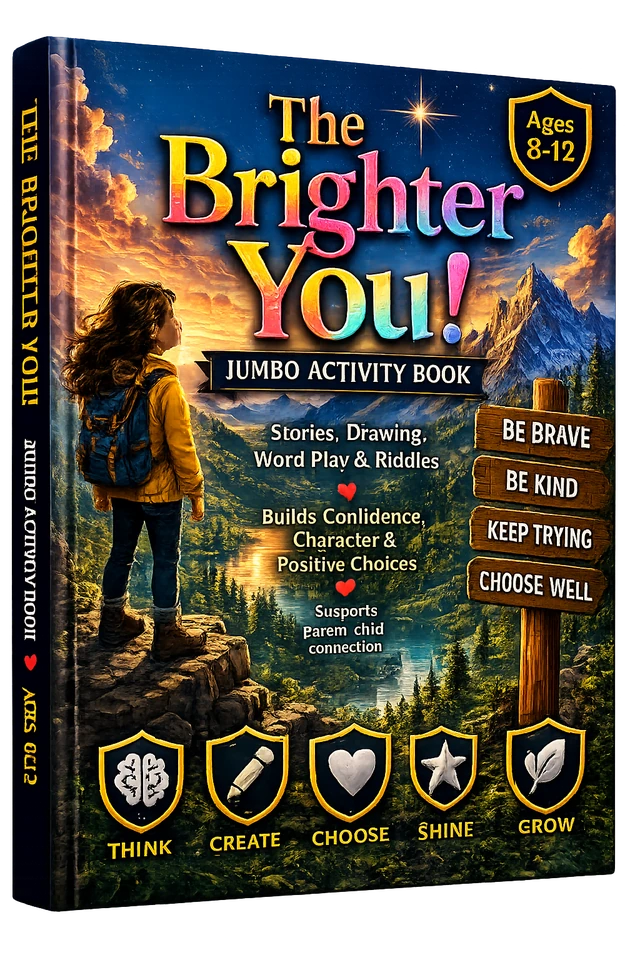
The Brighter You! Jumbo Activity Book
SH-K12 maintains a working relationship with Bilingual Learning Zone (BLZ) and highlights selected educational resources that complement our support for families.
Designed for ages 8–12, The Brighter You! combines stories, drawing, word play, riddles, and reflection activities that encourage confidence, character, creativity, self-awareness, positive choices, and parent-child connection through play.
Ages 8–12254 PagesStories • Drawing • Word Play • Riddles