Credibility & Perspective
About the Author
Each SH Parent Resource Center article is written by an experienced educator and family therapist and provides research-informed guidance grounded in practical classroom experience and a family-systems perspective. The resources are designed to help families better understand school challenges, learning habits, behavior, communication, and emotional development while providing realistic strategies that can be used at home and in partnership with schools.
Parent Resource Library
Parent-Child Communication & Emotional Support
Free Parent Resource
When Your Child Says, “I’m Just Bad at School”
Parent-Child Communication & Emotional SupportProtected PDFFree
Topic
When a child says, “I’m just bad at school,” treat the statement as a conclusion to examine, not a label to accept. Narrow the statement to the specific event or skill that triggered it and identify a realistic next step.
Research Basis
Supported by guidance and research from the American Psychological Association and Center on the Developing Child at Harvard University.
Included Activity
Turn “I’m Bad at School” Into a Next-Step Plan. Use this page to replace a broad negative label with one specific problem, one useful strategy, and one manageable next step.
View / Download PDF
Free Parent Resource
When Your Child Comes Home From School and Melts Down
Parent-Child Communication & Emotional SupportProtected PDFFree
Topic
A difficult after-school transition does not automatically mean something is wrong at school or at home. Children can carry stress, frustration, hunger, fatigue, social pressure, and the effort of managing expectations through the school day.
Research Basis
Supported by guidance and research from the American Academy of Pediatrics and Center on the Developing Child at Harvard University.
Included Activity
After-School Reset Plan. Use this page to make the transition from school to home predictable, calmer, and easier to observe over time.
View / Download PDF
Free Parent Resource
When Your Child Won’t Tell You What Happened at School
Parent-Child Communication & Emotional SupportProtected PDFFree
Topic
When a child comes home upset but refuses to explain what happened, repeated questioning can make the conversation harder. Lower the pressure, choose a better time to talk, and listen before trying to fix the situation.
Research Basis
Supported by guidance and research from the American Academy of Pediatrics and HealthyChildren.org.
Included Activity
Low-Pressure School Conversation Plan. Use this page to create one calm opening for conversation without turning the moment into an interrogation.
View / Download PDF
Free Parent Resource
Helping a Child Who Is Afraid of Making Mistakes
Parent-Child Communication & Emotional SupportProtected PDFFree
Topic
A child who is afraid of making mistakes may avoid starting, erase work repeatedly, ask for constant reassurance, or choose only tasks that feel safe. Help the child treat mistakes as information for the next attempt rather than evidence of fixed ability.
Research Basis
Supported by guidance and research from the American Psychological Association and American Academy of Pediatrics.
Included Activity
Mistake-to-Learning Reset. Use this page after one ordinary school mistake to practice recovery instead of repeated checking, avoidance, or giving up.
View / Download PDF
Recommended Product
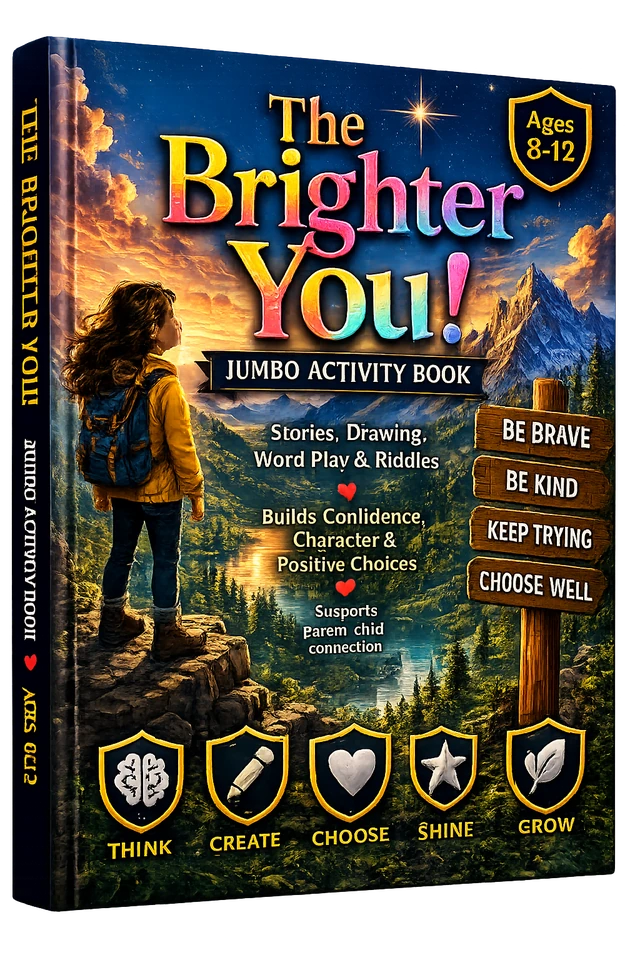
The Brighter You! Jumbo Activity Book
SH-K12 maintains a working relationship with Bilingual Learning Zone (BLZ) and highlights selected educational resources that complement our support for families.
Designed for ages 8–12, The Brighter You! combines stories, drawing, word play, riddles, and reflection activities that encourage confidence, character, creativity, self-awareness, positive choices, and parent-child connection through play.
Ages 8–12254 PagesStories • Drawing • Word Play • Riddles