Credibility & Perspective
About the Author
Each SH Parent Resource Center article is written by an experienced educator and family therapist and provides research-informed guidance grounded in practical classroom experience and a family-systems perspective. The resources are designed to help families better understand school challenges, learning habits, behavior, communication, and emotional development while providing realistic strategies that can be used at home and in partnership with schools.
Parent Resource Library
School Partnership & Advocacy
Free Parent Resource
Healthy Parent-Teacher Boundaries: Roles, Expectations, and Communication
School Partnership & AdvocacyProtected PDFFree
Topic
Communication Healthy boundaries do not mean less communication. They make communication clearer, calmer, and easier to use. Parents and teachers share the same broad goal: helping the child learn, feel supported, and make progress.
Research Basis
Supported by guidance and research from Centers for Disease Control and Prevention, National Parent Teacher Association, and U.S. Department of Education.
Included Activity
Parent-Teacher Communication Boundaries Checklist. Use this checklist to set clear communication expectations, prepare respectful messages, and decide when a meeting or urgent school procedure is more appropriate than ordinary email.
View / Download PDF
Free Parent Resource
Addressing a School Concern Calmly, Fairly, and Early
School Partnership & AdvocacyProtected PDFFree
Topic
A school concern is easier to solve when it is addressed early, calmly, and with clear facts. The goal is not to prove that one person is wrong. The goal is to understand what is happening and agree on a useful next step for the child.
Research Basis
Supported by guidance and research from Centers for Disease Control and Prevention, National Parent Teacher Association, and U.S. Department of Education.
Included Activity
Concern Meeting Planner and Friendly Follow-Up Email. Use this planner to organize the facts, prepare focused questions, agree on one reasonable action, and document the plan with a brief, respectful follow-up email.
View / Download PDF
Free Parent Resource
Asking the School for Help Before Problems Escalate
School Partnership & AdvocacyProtected PDFFree
Topic
Parents do not need to wait for a crisis, a failing grade, or a disciplinary meeting before contacting the school. Early communication gives the family and school more time to understand the pattern and try a reasonable support. Prepare before you call or write.
Research Basis
Supported by guidance and research from American Academy of Pediatrics, Centers for Disease Control and Prevention, and U.S. Department of Education.
Included Activity
Ten-Minute School Support Conversation Planner. Use this page before contacting the school. The goal is to describe one concern, ask useful questions, and leave with a clear follow-up plan.
View / Download PDF
Free Parent Resource
Spotting School Problems Early: What to Watch, Ask, and Record
School Partnership & AdvocacyProtected PDFFree
Topic
A school concern is easier to understand when families notice it early and gather clear information. One hard day does not always mean there is a larger problem. Look for a change that repeats, grows, or begins to affect the child at home or at school.
Research Basis
Supported by guidance and research from American Academy of Pediatrics and Centers for Disease Control and Prevention.
Included Activity
Early School Concern Observation Log. Use this log to separate direct observations from reported information, identify a possible pattern, and prepare one clear next step with the school or another appropriate professional.
View / Download PDF
Free Parent Resource
When Parents and Teachers See Two Different Sides of the Same Child
School Partnership & AdvocacyProtected PDFFree
Topic
A child can look very different at home and at school. That does not automatically mean that a parent or teacher is missing the truth. The settings place different demands on the child: task length, noise, peer interaction, transitions, adult attention, structure, time of day, and fatigue may all change what adults observe.
Research Basis
Supported by guidance and research from American Academy of Pediatrics, Centers for Disease Control and Prevention, and U.S. Department of Education.
Included Activity
Ten-Minute Home-School Pattern Comparison. Use this page to compare one behavior across home and school. The goal is to find conditions that may explain the difference and choose one shared support to test.
View / Download PDF
Free Parent Resource
When a School Concern Is Not Resolved: From Teacher to District Office
School Partnership & AdvocacyProtected PDFFree
Topic
Most school concerns should begin with the person closest to the problem. Escalation means moving the concern to the next appropriate level when an earlier plan has not resolved it. The purpose is not to punish anyone.
Research Basis
Supported by guidance and research from StopBullying.gov, U.S. Department of Education, Office for Civil Rights, and U.S. Department of Education.
Included Activity
Universal Chain-of-Command Schematic. Use this general pathway to organize an unresolved concern. School and district titles differ, and specialized procedures may control. Immediate safety, abuse, serious threats, or medical emergencies should not wait through the ordinary sequence.
View / Download PDF
Recommended Product
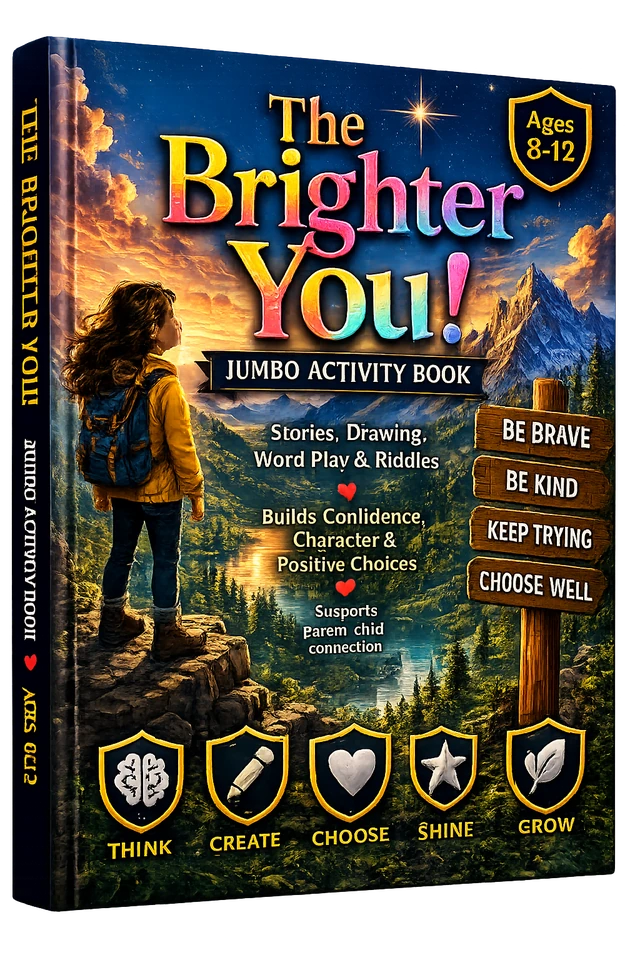
The Brighter You! Jumbo Activity Book
SH-K12 maintains a working relationship with Bilingual Learning Zone (BLZ) and highlights selected educational resources that complement our support for families.
Designed for ages 8–12, The Brighter You! combines stories, drawing, word play, riddles, and reflection activities that encourage confidence, character, creativity, self-awareness, positive choices, and parent-child connection through play.
Ages 8–12254 PagesStories • Drawing • Word Play • Riddles